
Overview
The Foreign Corrupt Practices Act (FCPA), enacted in 1977, is one of the primary tools the United States uses to combat corruption in international business. The act arose from investigations in the 1970s that revealed widespread bribery of foreign government officials by U.S. companies. Since then, FCPA enforcement has become a priority for both the Securities and Exchange Commission and the U.S. Department of Justice, with tens of billions of dollars in penalties assessed against violating companies.
The FCPA contains two principal components: anti-bribery provisions that prohibit corrupt payments to foreign officials, and accounting provisions that require accurate books and records. Both can result in significant civil and criminal penalties, including criminal fines and disgorgement of illicit profits.
The FCPA prohibits the offer, payment, or promise to pay money or anything of value—i.e., a bribe—to any foreign official in an effort to win or retain business from that foreign official’s government.
“Anything of value” is interpreted broadly and can include cash payments, gifts, travel expenses and entertainment, employment offers for relatives of government officials, charitable donations made at an official’s request, computer equipment, or other benefits. Courts have found FCPA violations involving relatively modest amounts, demonstrating that the size of the bribe does not determine whether the law has been broken.
The term “foreign official” is also broadly defined under the Foreign Corrupt Practices Act. It includes employees of government-owned or government-controlled entities, even if those entities engage in commercial activities. This means employees of state-owned enterprises, such as national oil companies, telecommunications providers, or airlines, may qualify as foreign officials under the FCPA. Additionally, officials of public international organizations and foreign political parties or candidates are covered.
Under the FCPA, a bribe does not need to be paid in order to violate the law. The FCPA’s anti-bribery provisions apply to a broad array of organizations and individuals, including US companies and their officers, directors, employees, stockholders, and agents (including third-party agents, consultants, and others), American citizens, American nationals, American residents, and foreign corporations that trade securities in the US, and others. Those who are not explicitly covered by the FCPA may be prosecuted under it if they, or their agent, engage in furthering a corrupt payment. For example, if a foreign national were to attend a meeting in the US to arrange a bribe from a US company to someone in his government, that foreign national would be subject to prosecution under the FCPA.
The FCPA applies to conduct occurring entirely outside the United States in many circumstances. Domestic concerns, including U.S. companies, can face an FCPA violation for corrupt payments made by their foreign subsidiaries or through third-party intermediaries acting on their behalf. This extraterritorial reach is particularly important for whistleblowers who may have knowledge of overseas misconduct involving bribing foreign officials to secure business or contracts in foreign countries.
It is not a violation of the FCPA, however, if (i) the payments are legal under the written laws of the country in which the payments are made; or (ii) the payment is a reasonable expenditure directly related to the conducting of business with a foreign government.
An additional exception exists for “facilitating payments”, small payments to foreign persons or government officials to expedite routine, non-discretionary governmental actions such as processing visas, providing utilities, or scheduling inspections. However, this exception is narrow, and many companies have adopted policies prohibiting all improper payments to foreign officials regardless of this exception. Additionally, while such payments may not violate the FCPA’s anti-bribery provisions, they may still raise issues under the Act’s FCPA accounting provisions if not properly recorded.
Additionally, the FCPA requires that certain accounting provisions be met by publicly traded companies in the United States. This requirement is designed to prevent the use of accounting schemes to hide bribes or other unlawful payments and to offer an accurate representation of the company’s finances to shareholders and the SEC.
The accounting provisions require companies to maintain accurate books and records that fairly reflect transactions and to maintain an adequate system of internal accounting controls. Violations of these provisions can occur even without proof of an underlying bribery scheme. Companies have been sanctioned for FCPA accounting violations when they failed to properly record or investigate suspicious illegal payments, used vague or misleading descriptions for transactions, or maintained inadequate systems to detect and prevent corrupt payments. The Department of Justice and Exchange Commission have pursued FCPA charges against companies showing willful blindness or conscious disregard for warning signs of improper payments.
These accounting provisions are particularly relevant to whistleblowers who may observe financial irregularities, unusual payments to consultants or third-party intermediaries, inadequate due diligence on third-party agents, or efforts to conceal the true nature of payments in corporate records.
While the law itself has not changed, the Trump administration’s approach to enforcing the FCPA has undergone significant changes since 2025. In February 2025, the administration issued an executive order directing the DOJ to pause new FCPA investigations and enforcement actions for 180 days while reviewing its enforcement policy for potential harm to U.S. economic competitiveness and foreign policy interests. After the review, in June 2025, DOJ issued new FCPA enforcement guidelines which instructed prosecutors to prioritize cases that: 1) harm U.S. economic or national security interests; 2) disadvantage U.S. companies in global competition; 3) involve large-scale or systemic bribery; 4) are connected to cartels, transnational crime, or strategic sectors. The policy also directs prosecutors to avoid overly burdensome investigations of U.S. companies without strong evidence, to prioritize individual criminal misconduct rather than broad corporate investigations, and to encourage voluntary self-disclosure and cooperation. As a result of this change in enforcement priorities, the volume of SEC and DOJ investigations and enforcement actions in this area of the law have dropped.
The Role of Whistleblowers in FCPA Enforcement
Whistleblowers have been instrumental in many significant FCPA case investigations and enforcement actions. FCPA violations often involve conduct occurring in multiple countries, complex bribery schemes routed through intermediaries, and efforts to conceal the true nature of transactions. Insiders—including employees, officers, and even a former executive or vice president—with direct knowledge of these arrangements can provide critical information that would be difficult for regulators to uncover through routine examination.
In light of the recent and significant change in enforcement priorities at the DOJ and SEC, sophisticated whistleblowers are strongly advised to consult experienced whistleblower counsel before blowing the whistle and exposing themselves to the risks associated with being an FCPA whistleblower.
Common red flags that whistleblowers identify in FCPA cases include:
- Payments to consultants, agents, or intermediaries that appear excessive relative to services provided
- Third-party agents or consultants with close ties to government officials
- Unusual payment requests, such as payments to pay money to offshore accounts or to third-party entities
- Vague or misleading descriptions of illegal payments in corporate records (“consulting fees,” “marketing expenses”)
- Lack of due diligence on third party intermediaries
- Pressure from management to approve questionable payments or to overlook compliance concerns
- Requests to backdate agreements or create false documentation
FCPA penalties are particularly significant, in part because the contracts underlying the bribery scheme are often worth a great deal and also because the cases usually involve parallel proceedings by the SEC and DOJ.
The SEC pursues civil enforcement actions for foreign corrupt practices violations, while the Department of Justice handles criminal prosecutions. In many FCPA cases, both agencies bring parallel actions against the same companies or individuals, resulting in combined penalties that can reach into the billions of dollars. Criminal penalties can include criminal fines and imprisonment for individuals who paid bribes or facilitated bribery, while civil penalties can include disgorgement of illicit profits, civil monetary penalties, prejudgment interest, and injunctive relief.
The Department of Justice may also resolve charges through a deferred prosecution agreement in certain FCPA enforcement matters, particularly where companies demonstrate strong cooperation and remediation.
For whistleblowers, FCPA cases can result in substantial awards under the SEC Whistleblower Program. Because settlements to resolve FCPA charges often involve large monetary sanctions exceeding $1 million, the statutory award range of 10-30% can translate to significant compensation for whistleblowers whose information leads to successful enforcement actions against corruption.
What are some noteworthy cases?
- In 2022, the SEC and DOJ fined Glencore plc, one of the world’s largest recyclers, $1.1 billion for engaging in systematic bribery of officials at state owned enterprises to obtain favorable oil contracts.
- In 2020, the SEC and DOJ fined Goldman Sachs, a multinational investment bank and financial services firm, $2.9 billion, the largest FCPA resolution in history to settle charges that its bankers paid hundreds of millions of bribes to Malaysian and Abu Dhabi officials to secure lucrative roles underwriting bonds.
- In 2019, the SEC and DOJ fined Ericsson, a global telecom company, more than $1 billion to settle charges that it architected a massive bribery scheme in which phony business consultants paid off government officials in various foreign countries.
- In 2018, Brazilian energy company Petróleo Brasileiro S.A. agreed to pay $1.78 billion to settle a far-reaching bribery and bid-rigging scheme involving illegal payments to politicians and political parties.
- In 2008, engineering giant Siemens AG agreed to pay $800 million to settle charges that it spent almost $1.4 billion to bribe foreign government officials around the globe. Siemens paid an additional $856 million to settle related charges in Germany, bringing the total penalty to $1.6 billion.
These landmark cases illustrate the global reach of FCPA enforcement and the substantial penalties companies face for violations. They also demonstrate that FCPA violations often involve systemic corruption spanning multiple countries and years, making insider information particularly valuable to investigators.
In similar cases, a gas company agreed to settle FCPA charges involving payments in South Korea, and Lilly agreed to resolve charges related to bribes paid to foreign government officials to secure business in multiple jurisdictions.
Recent Enforcement Trends
FCPA enforcement has increased significantly over the past two decades. Both the SEC and U.S. Department of Justice have devoted substantial resources to investigating and prosecuting foreign corrupt practices cases. Key trends include:
- Greater scrutiny of compliance programs, with companies receiving credit for robust anti-corruption compliance programs, adequate systems of internal accounting controls, and self-reporting of violations
- Increased focus on individual accountability, including FCPA charges against executives, officers, and other employees who facilitated illegal payments or showed conscious disregard for compliance concerns
- Cooperation among international law enforcement agencies, leading to coordinated enforcement actions across multiple jurisdictions
- Enhanced scrutiny of industries with high government interaction, such as pharmaceuticals, healthcare, energy, telecommunications, and defense contracting
- Cases involving foreign persons, including a Chinese national and other individuals outside the United States, demonstrating the Foreign Corrupt Practices Act’s broad jurisdictional reach
For potential whistleblowers, these trends underscore the importance of coming forward with information about FCPA violations. Companies that self-report misconduct and cooperate with investigations by the Department and the Exchange Commission often receive reduced penalties, but whistleblowers who provide original information to the SEC before a company self-reports may still be eligible for awards.
Compliance and Prevention
The SEC and Department of Justice have published guidance encouraging companies to implement effective FCPA compliance programs. Key elements include:
- Written policies prohibiting corrupt payments and clearly defining prohibited conduct under anti-bribery provisions
- Risk-based due diligence on third-party intermediaries, agents, and business partners before retaining business consultants or agents
- Training programs for employees, particularly those in high-risk positions or locations where interaction with foreign government officials is likely
- Internal controls and audit procedures to detect and prevent improper payments and ensure compliance with certain accounting provisions
- Confidential reporting mechanisms for employees to raise concerns about potential FCPA violations
- Prompt investigation and remediation of potential violations involving corruption or bribery
The Foreign Corrupt Practices Act requires companies, particularly those with their principal place of business in the United States or whose securities trade on U.S. exchanges, to maintain robust systems. Despite these compliance efforts, violations continue to occur. Whistleblowers often come forward when they observe management overriding compliance controls, pressuring employees to circumvent anti-bribery policies to secure or retain business contracts, or retaliating against individuals who raise concerns about bribes paid to foreign officials or government entities.
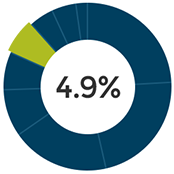
In recent years, on average, 4.9% of all SEC whistleblower tips have involved this type of securities violation.